
Robotics in neuro-rehabilitation
Robotic devices offer a promising solution for rehabilitation in neurological conditions where traditional methods may fall short. Robotics in neuro-rehabilitation provide precise and tailored training that matches each patient’s abilities, helping to monitor progress more accurately. Unlike human therapists, robots excel at repetitive tasks and can measure physical improvements consistently.
Introduction
“A robot is a re-programmable, multi-functional, manipulator designed to move material, parts, or specialized devices through variable programmed motions for the performance of a task.” Robotics Industry Association (~1980)
They excel in speed, accuracy, power, and endurance over time, tasks that are challenging for humans. However, robots lack human flexibility, adaptation, independent communication, high-level information processing, and responsiveness to subtle sensory inputs.

Robotics in neuro-rehabilitation and Physical Therapy
Robotics in neuro-rehabilitation has transformed physical therapy for people with neurological impairments. These advanced systems help patients by providing precise, repetitive movements that are crucial for recovery. Robots can deliver consistent and controlled therapy sessions, making it easier for patients to relearn motor skills.
They also collect valuable data on patient progress, helping therapists tailor individualized treatment plans. Examples include exoskeletons like the MIT Manus, which supports shoulder and elbow movements, and operational-type machines like the ARM-Guide that assist with specific limb movements.
Additionally, robots like the Lokomat system help patients practice walking, while devices like the ArmeoSpring support arm movements in a virtual environment. The combination of virtual reality with robotic systems makes therapy more engaging and effective.
Despite challenges like high costs and the need for specialized training, ongoing research aims to make these systems more affordable and user-friendly. Future advancements, including portable robots and AI integration, promise to further enhance the effectiveness and accessibility of robotic-assisted neuro-rehabilitation.
Components of Robotic System
A typical robotic system includes five main parts:
These systems enable more intensive and prolonged training sessions, which can be adjusted remotely, even for patients unfamiliar with technology. This approach enhances rehabilitation outcomes by focusing on measurable improvements in strength, precision, and endurance that might be challenging to achieve with conventional therapy alone.
Comparison between machine and human : opportunities and limitation
Machines in Neurological Rehabilitation
Precision and Repetition:
Machines offer unparalleled precision in executing repetitive tasks essential for rehabilitation exercises. They can precisely control movements, ensuring consistent therapy sessions tailored to specific therapeutic goals. This precision allows for accurate tracking of progress over time, facilitating data-driven adjustments to treatment plans.
Pros: Machines provide consistent and precise therapy sessions, enabling objective measurement of progress and fine-tuned adjustments to rehabilitation protocols.
Cons: Lack of flexibility in adapting to individual patient needs or responding to unexpected changes during therapy sessions.
Data Collection and Analysis:
Robotic devices excel in capturing detailed data on patient performance, including movement range, strength, and coordination. This objective data allows therapists to monitor progress objectively and make informed decisions regarding treatment adjustments. Machine learning algorithms can analyze large datasets to identify patterns and optimize rehabilitation strategies.
Pros: Objective data collection enables precise monitoring of patient progress, facilitating evidence-based therapy adjustments & personalized rehabilitation plans.
Cons: Over-reliance on data metrics may overlook qualitative aspects of patient experience or subtle improvements in functional abilities.
Consistency and Endurance:
Robots maintain consistent performance throughout therapy sessions, unaffected by fatigue or variations in attention. They can execute exercises with high endurance over extended periods, ensuring patients receive consistent therapeutic interventions without degradation in quality.
Pros: Robots maintain consistent therapy quality and endurance, minimizing variability in treatment delivery over time.
Cons: Limited ability to adapt therapy in real-time based on patient responses or emotional cues, potentially impacting patient engagement.
Humans in Neurological Rehabilitation
Adaptability and Personalization:
Human therapists bring a level of adaptability and personalized care that machines cannot replicate. They can adjust therapy in real-time based on patient responses, adapt exercises to accommodate individual needs and preferences, and provide emotional support crucial for patient motivation and engagement.
Pros: Therapists can personalize therapy sessions, adapt exercises to patient needs, and provide emotional support, enhancing patient motivation and engagement.
Cons: Human therapists may introduce variability in therapy delivery, affecting consistency in treatment approaches and objective measurement of progress.
Empathy and Communication:
Human therapists establish empathetic connections with patients, fostering trust and motivation crucial for rehabilitation success. They can communicate complex instructions effectively, interpret non-verbal cues, and adjust their approach based on patient feedback and emotional state, enhancing overall patient experience and adherence to therapy.
Pros: Empathetic communication fosters trust, motivation, and better patient outcomes by addressing emotional and psychological aspects of recovery.
Cons: Variability in communication styles and interpersonal skills among therapists may impact the consistency and quality of patient interactions.
Flexibility and Adaptation:
Human therapists possess the flexibility to modify therapy sessions dynamically in response to patient progress, changing clinical conditions, or unexpected challenges during rehabilitation. They can integrate new therapeutic techniques or adjust rehabilitation goals based on evolving patient needs, optimizing treatment outcomes.
Pros: Therapists can adapt therapy sessions in real-time, responding to patient progress and clinical changes, maximizing rehabilitation effectiveness.
Cons: Human variability in skill levels and experience may lead to inconsistencies in therapy delivery and treatment outcomes.
In conclusion, integrating the strengths of machines and humans in neurological rehabilitation can optimize therapy outcomes by combining precise data-driven interventions with personalized, empathetic care. Effective rehabilitation strategies should leverage technology for objective measurement and analysis while harnessing human skills for adaptive, empathetic therapy delivery.
Table of Comparison between machine and humans.
In neurological rehabilitation, machines are great at doing precise, repetitive exercises and collecting accurate data. Humans are good at adapting therapy, showing empathy, and communicating effectively. By combining these strengths, we can improve therapy results. Machines provide accurate measurements, while humans offer personalized care and motivation.
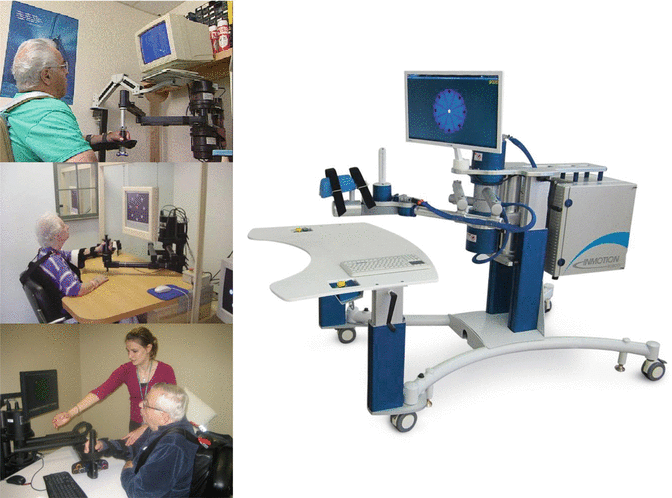
Several projects evolved from early prototypes over the past two decades, including the Manus Project, Master Project, DeVAR, Regenesis Workstation Robot, RTX Robot Arm, Handy 1, MoVAR, Hadar WorkPlace Adaptations, and MIT Manus. These projects focused on developing manipulators and assistive robots for disabled individuals, improving cost-performance balance, and implementing industrial robots for rehabilitation. Notably, the MIT Manus, widely marketed as the In-Motion Shoulder-Elbow Robot, has been a significant development in the field.
Classification of Robotic Systems
- Passive Systems: Without actuators.
- Active Systems: With actuators driving the paretic arm.
- Sub-classifications:
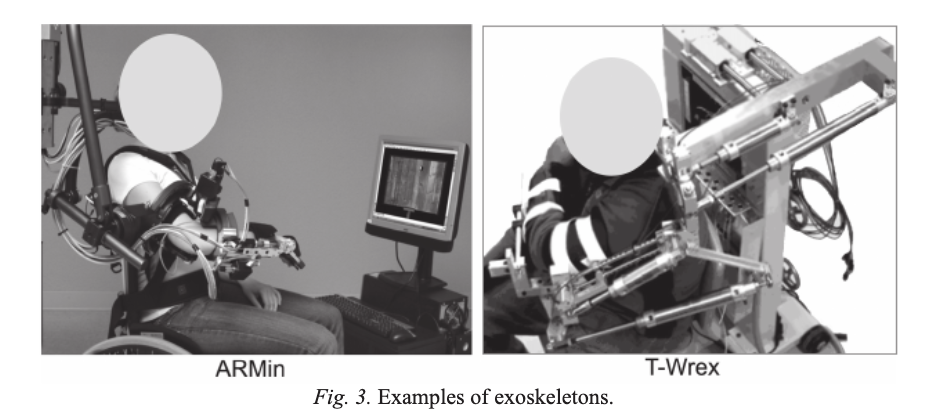
- Exoskeletons: Worn by the user, replicating human skeleton joints and links.
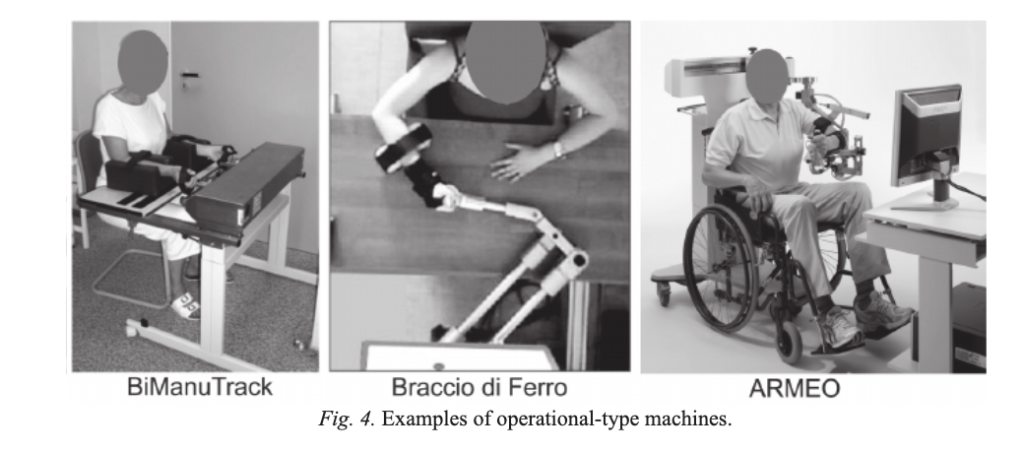
- Operational-type Machines (Manipulators): Designed for end-effector trajectories matching natural hand movement.
Exoskeletons
Operational-type Machines (Manipulators)
Key Devices
- MIT Manus:
- 2 DOF for shoulder and elbow.
- Operates on the horizontal plane.
- Low mechanical impedance.
- Supports impaired movements.
- Records trajectory and strength.
- ARM Guide:
- 3 DOF device.
- Assists reaching movements.
- Uses magnetic fields to aid exercises.
- Measures extent and strength of movement.
- Others: Know more key devices used for neuro-rehabilitation
Future of Robotics in Neuro-rehabilitation
Robotics will play a major role in the future of neurorehabilitation by making therapy more personalized, effective, and accessible. Future robotic systems will be smarter and more adaptive, meaning they can adjust to each patient’s unique needs and progress.
They will also be easier to use, allowing more patients to benefit from home-based rehabilitation under remote supervision. These advancements will help improve recovery rates and make therapy more efficient by combining the precision and consistency of robots with the flexibility and empathy of human therapists.
Overall, the integration of advanced robotics in neurorehabilitation promises a future where recovery is faster, more effective, and widely accessible.
Summary
Robotic systems in neurological rehabilitation can be classified as passive or active, and further into exoskeletons or operational-type machines. Exoskeletons, with their ability to replicate human joint movements and provide various modalities of use, offer significant advantages but come with maintenance and portability challenges.
Operational-type machines focus on end-effector interaction, enabling natural hand movement trajectories and effective motor exercises. Notable systems like MIT Manus and ARM Guide exemplify the integration of technology in rehabilitation, offering precise support and measurement capabilities.


[…] Neuro-rehabilitation focuses on improving the function and quality of life for individuals who have experienced neurological injuries, such as stroke, traumatic brain injury, or spinal cord injury. Robotics and virtual reality (VR) have emerged as powerful tools in this field, offering advanced methods for retraining movement and enhancing motor recovery. […]
[…] Robotics in Neurorehabilitation […]
You’ve written terrific content on this topic, which goes to show how knowledgable you are on this subject. Thank you and keep posting good stuff!
please follow me as well.