
What is Functional Electrical Stimulation (FES)?
Functional Electrical Stimulation (FES) is a technique used to elicit muscle contractions using electrical impulses. It is employed in various applications, primarily for the restoration of function in individuals with neurological impairments. FES can be applied for both upper and lower extremity rehabilitation, and it can be delivered through surface or implanted electrodes.
- What is Functional Electrical Stimulation (FES)?
- History of Functional Electrical Stimulation (FES)
- Methods of Functional Electrical Stimulation (FES) Delivery
- Implementation Examples
- Flow Chart for Walking Sequence (Kralj and Bajd Technique)
- Functional Control
- Implementation Examples
- Table of Implementation examples in Rehabilitation
- Advanced FNS Systems
- Conclusion
- Future Directions in Functional electrical stimulation (FES)
History of Functional Electrical Stimulation (FES)
Functional Electrical Stimulation (FES) was first tried in the United States in the 1960s for stroke patients, but it wasn’t used regularly until later because it was considered experimental.
By the late 1970s, research showed it could help with foot drop and finger movements in stroke patients. In the mid-1980s, researchers in Salisbury, UK, started using FES for people with spinal cord injuries. They later developed devices for people with MS in the early 1990s, and these treatments continue today.
Currently, researchers are studying if FES can help with swallowing, hand and arm movements, and breathing problems in people with lung disease and stroke. It also has potential future uses for treating MS.
Applications of Functional Electrical Stimulation (FES) in neurorehabilitation
- Upper Extremity Rehabilitation: Focuses on restoring grasp-release function.
- Lower Extremity Rehabilitation: Aims at enabling standing and walking in paraplegic subjects.
- Stroke Rehabilitation: Helps restore mobility in limbs affected by stroke, addressing issues like foot drop and impaired hand movements.
- Spinal Cord Injury: Aids in muscle strengthening and control for individuals with paralysis or limited movement due to spinal cord damage.
- Multiple Sclerosis (MS): Assists in managing symptoms such as muscle weakness and stiffness, improving mobility and quality of life.
- Parkinson’s Disease: Used to alleviate symptoms like muscle rigidity and freezing of gait, enhancing movement and balance.
- Muscle Atrophy: Helps maintain muscle mass and strength in individuals with conditions causing muscle wasting.
- Foot Drop: Specifically targets the ability to lift the front part of the foot, facilitating walking and reducing the risk of falls.
- Swallowing Disorders: Investigated for its potential to improve swallowing function in patients with dysphagia, enhancing nutritional intake and quality of life.
- Respiratory Disorders: Explored for assisting breathing in conditions like chronic obstructive pulmonary disease (COPD) and spinal cord injuries affecting respiratory muscles.
FES continues to be researched for its expanding applications across various neurological and musculoskeletal conditions, offering promising avenues for rehabilitation and functional improvement.
We will briefly discuss each rehabilitation method shortly.
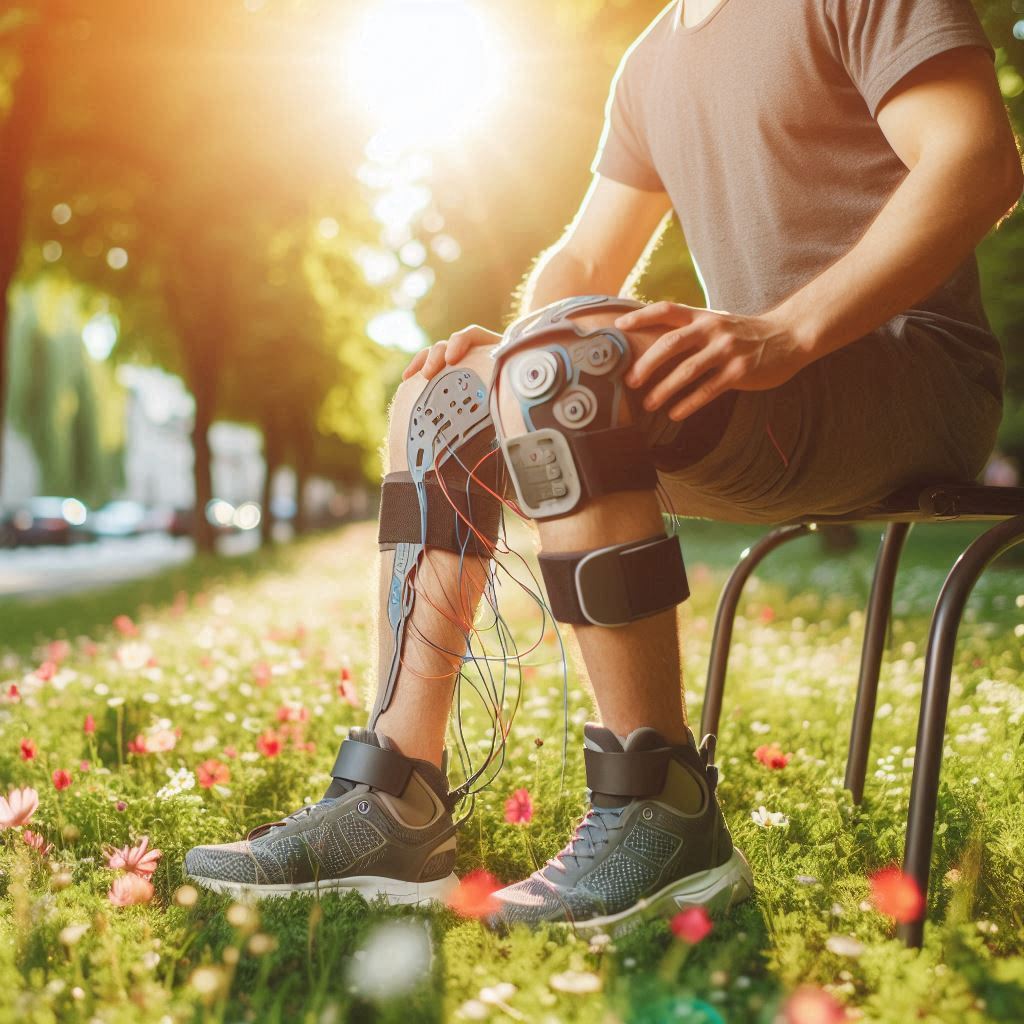
Methods of Functional Electrical Stimulation (FES) Delivery
| Method | Description | Advantages | Disadvantages |
| Surface Electrodes | Electrodes placed on the skin surface. | Non-invasive, easy to apply. | Limited to superficial muscles, less precise. |
| Subcutaneous Electrodes | Electrodes placed under the skin. | More precise muscle activation. | Requires minor surgery, potential for infection. |
| Intramuscular Electrodes | Electrodes placed within the muscle. | Focused muscle contraction. | Invasive, potential for discomfort. |
| Epimysial Electrodes | Electrodes placed on the muscle surface. | Effective for deep muscles. | Requires surgical placement. |
| Nerve Electrodes | Electrodes placed around or near nerves. | Direct nerve activation. | Invasive, complex placement. |
Lower Extremity Rehabilitation
The smallest set of muscles is necessary to perform the basic function of walking.
Key Muscle Groups:
- Knee Extensors
- Hip Flexors
- Ankle Dorsiflexors
Key Studies and Techniques
- Single Channel Implantable Stimulator: Implanted near the peroneal nerve, eliciting the flexor pattern.
- Kralj and Bajd Technique: Utilizes two channels per leg for standing and reciprocal walking.
- Channel 1: Knee extensors
- Channel 2: Flexion withdrawal of hip, knee, and ankle via peroneal nerve stimulation.
Implementation Examples
| Technique | Description | Channels Used | Feedback |
| Surface Stimulation (Kralj and Bajd) | Two channels for knee extensors and flexion reflex. | 4 (2 per leg) | Open loop, user-initiated. |
| Marsolais System | Utilizes up to 16 muscles with percutaneous electrodes. | 16+ | Open loop with feedback for knee and hip position. |
| Holle and Thoma | Multichannel implantable system for knee and hip extensors. | Multichannel | Open loop. |
Flow Chart for Walking Sequence (Kralj and Bajd Technique)
A[Start Walking] –> B[Activate Knee Extensor of Leg 1]
B –> C[Trigger Flexion Reflex of Leg 2]
C –> D[Leg 2 Flexes at Hip, Knee, Ankle]
D –> E[Leg 2 Advances]
E –> F[Deactivate Flexion Reflex]
F –> G[Activate Knee Extensor of Leg 2]
G –> H[Trigger Flexion Reflex of Leg 1]
H –> I[Repeat Sequence]
Upper Extremity Rehabilitation
Functional Control
- Grasp-Release Function: Controlled via surface or implanted techniques.
- Commonly Used Muscles: Finger and thumb flexors and extensors, thumb abductor and adductor.
Implementation Examples
| Technique | Description | Channels Used | Feedback |
| Surface Stimulation | External electrodes for grasp-release. | Variable | Open loop with visual feedback. |
| Implantable Stimulators (Pasniczek, Keith) | Implanted electrodes for fine muscle control. | Multichannel | Closed loop with sensory feedback. |
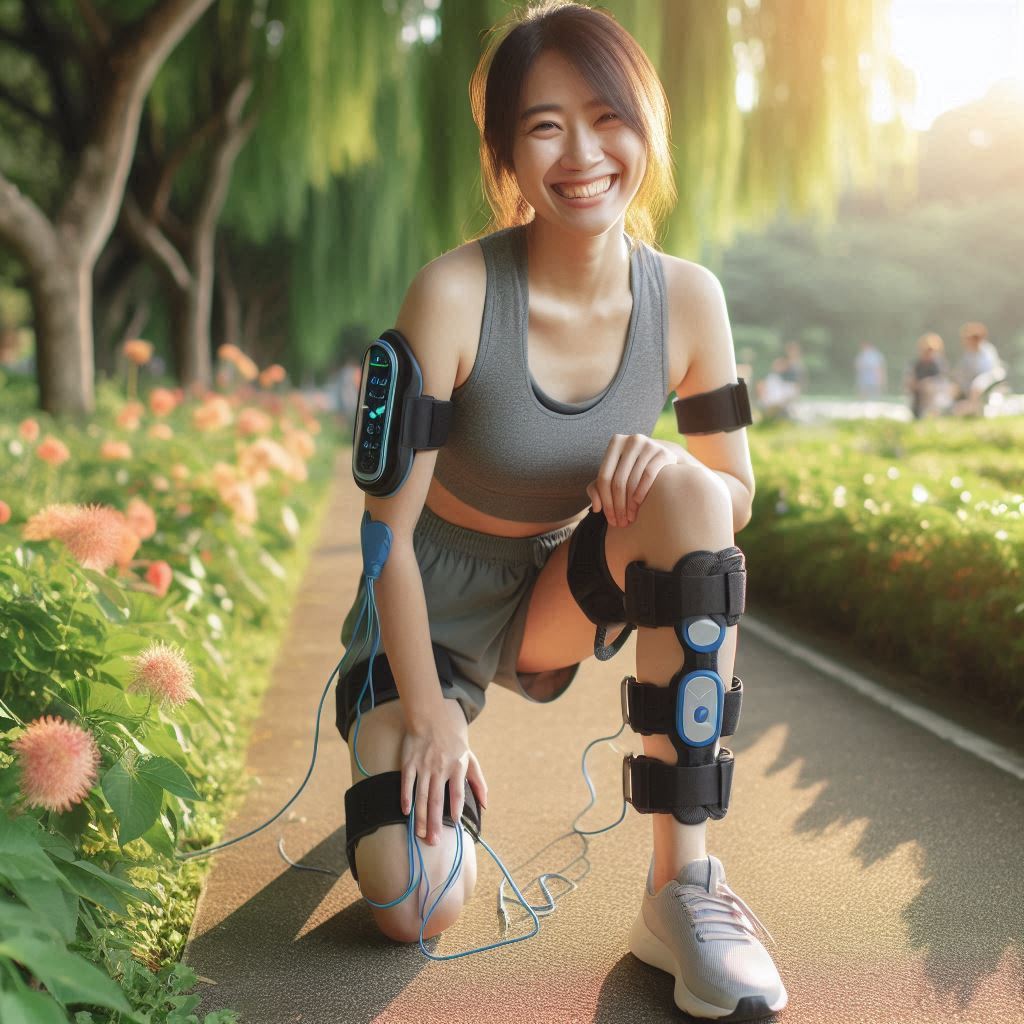
Table of Implementation examples in Rehabilitation
| Condition | Problems Addressed | Implementation Examples | Techniques Used |
| Stroke Rehabilitation | Foot drop, impaired hand movements | – Foot Drop: WalkAide, Bioness L300 – Hand Function: FES systems for hand rehabilitation | Surface FES (for foot drop and hand muscles) |
| Spinal Cord Injury | Muscle weakness, paralysis | – NESS L300 Plus for lower limb movement – Functional Electrical Stimulation Cycling (FESC) | Surface FES (for lower limb movement), Implanted FES (for targeted muscle groups) |
| Multiple Sclerosis (MS) | Muscle weakness, mobility issues | – PaceX by Odstock Medical for walking – Upper limb FES systems for arm and hand function | Surface FES (for walking and upper limb function), Implanted FES (for targeted muscle groups) |
| Parkinson’s Disease | Gait issues, muscle rigidity | – FreeWalk for gait improvement | Surface FES (for leg muscles involved in gait) |
| Muscle Atrophy | Muscle loss, weakness | – FES for muscle retraining | Surface FES (for muscle groups affected) |
| Foot Drop | Difficulty lifting foot during walking | – WalkAide, Bioness L300 | Surface FES (for foot dorsiflexors) |
| Swallowing Disorders | Dysphagia, difficulty swallowing | – FES for throat muscles to improve swallowing | Surface FES (for pharyngeal muscles) |
| Respiratory Disorders | Breathing difficulties, respiratory muscle weakness | – FES for respiratory muscle stimulation | Surface FES (for respiratory muscles), Implanted FES (for targeted respiratory muscles) |
List of FES currently used for rehabilitation
| S.No | Name of FES Device | Primary Purpose |
|---|---|---|
| 1 | RT300 | Lower and upper limb cycling for muscle strengthening |
| 2 | Bioness L300 Go | Foot drop correction and gait improvement |
| 3 | WalkAide System | Foot drop correction and gait improvement |
| 4 | NeuroMetrix Quell | Pain relief and chronic pain management |
| 5 | Odstock Dropped Foot Stimulator | Foot drop correction and gait improvement |
| 6 | RehaMove 2 | Muscle strengthening and movement restoration |
| 7 | Hasomed RehaStim | Upper and lower limb rehabilitation |
| 8 | Xcite FES Rehabilitation System | Upper and lower limb exercise and re-education |
| 9 | Cefar Rehab X2 | Muscle strengthening and pain management |
| 10 | MyGait | Foot drop correction and gait improvement |
| 11 | NESS H200 Wireless | Hand and wrist function restoration |
| 12 | Bioness H200 | Hand and wrist function restoration |
| 13 | Compex Rehab | Muscle strengthening and neuromuscular re-education |
| 14 | Restorative Therapies RT300 | Lower and upper limb cycling for muscle strengthening |
| 15 | VIVISTIM System | Upper limb rehabilitation post-stroke |
| 16 | SaeboStim Micro | Hand function restoration and pain management |
| 17 | Empi Continuum | Muscle strengthening and pain management |
| 18 | WalkAide | Foot drop correction and gait improvement |
| 19 | StimMaster Orion | Muscle strengthening and pain management |
| 20 | NeuroRegen | Nerve regeneration and muscle re-education |
| 21 | Biostim M7 | Muscle strengthening and pain management |
Advanced FNS Systems
1.Closed Loop Feedback
- Purpose: Corrects for discrepancies between desired and actual actions.
- Components:
- Sensors: Joint position, contact force.
- Controllers: Adjust stimulation based on sensor feedback.
2. Substitutional Sensory Feedback
- Purpose: Provides cutaneous sensory cues related to movement or force.
- Techniques: Subcutaneous electrodes generate sensory feedback.
Research and Development Pathways
Research and development in Functional Electrical Stimulation (FES) focuses on advancing techniques and applications to enhance its effectiveness and expand its therapeutic scope.
| Area | Focus | Goals |
| Technical Development | Improved sensors, stimulators, electrodes. | Smaller, lower power, higher computational capability. |
| Biological Sciences | Understanding neural excitation mechanisms. | Selective electrodes, alternative feedback sources. |
| Clinical Sciences | Application of neural prostheses. | Refined movements, integration with other modalities. |
You may also like:
Conclusion
FES offers promising advancements in the rehabilitation of individuals with spinal cord injuries and other neurological impairments. The integration of technical, biological, and clinical research continues to enhance the efficacy and applicability of FES systems. Close collaboration among clinicians, scientists, and users is essential for the successful implementation and evolution of FES technologies.
Future Directions in Functional electrical stimulation (FES)
- Development of more sophisticated closed-loop and sensory feedback systems.
- Continued refinement of electrode and sensor technologies.
- Expanding clinical trials to demonstrate safety and efficacy.
- Integration of FES with other rehabilitation modalities for comprehensive treatment.


